Wearables & Sensors

Wearables & Sensors: Navigating Regulations, Reimbursement, and Claims in the US and EU
The wearable technology market has exploded, transforming how individuals monitor their health. From fitness trackers counting steps to Continuous Glucose Monitors (CGMs) managing diabetes, these devices sit at the complex intersection of consumer electronics and regulated medical devices. For manufacturers, clinicians, and payers, understanding the regulatory divide, accuracy standards, and reimbursement pathways is essential for market success.
Defining the Spectrum: Wellness vs. Medical Devices
The primary distinction lies in intended use. Regulatory bodies do not judge a device by its hardware alone but by the claims made about its purpose.
The United States (FDA)
Under the FDA’s General Wellness: Policy for Low Risk Devices, a product is a wellness device if it is intended for the general population to maintain a healthy lifestyle (e.g., "track steps," "encourage sleep"). These are exempt from premarket review.
However, if a device claims to diagnose, treat, or monitor a specific disease, it becomes a medical device:
- Class II Medical Device: Most wearables with medical claims (e.g., ECG for atrial fibrillation, CGMs for diabetes) fall here. They require 510(k) clearance to prove substantial equivalence to a predicate device.
- Accuracy Standards: The FDA mandates rigorous analytical and clinical validation. For example, a CGM must demonstrate a Mean Absolute Relative Difference (MARD) below a specific threshold (often <10% for newer generations) to be cleared.
The European Union (EU MDR)
The EU lacks a specific "wellness" exemption. Under Regulation (EU) 2017/745 (MDR), any device intended for a medical purpose is regulated.
- Scope Expansion: Many products previously Class I under the old directive are now Class IIa or IIb under the MDR, especially those with software components or measuring functions.
- Notified Bodies: Unlike the US self-declaration for some low-risk items, EU devices generally require assessment by a Notified Body for Classes IIa, IIb, and III.
- Performance Evaluation: Manufacturers must conduct a Performance Evaluation Report (PER) demonstrating safety and performance, often requiring clinical data.
Key Technologies and Their Regulatory Status
1. Activity Trackers (Wellness)
Devices like basic Fitbits or Garmin watches that track steps, calories, and heart rate for fitness are generally wellness products in both regions, provided they avoid disease claims.
Risky Claim: "Detect signs of heart failure." (Triggers Medical Device status)
2. ECG Wearables
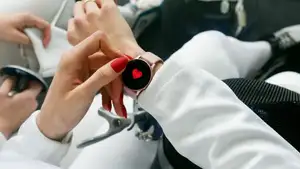
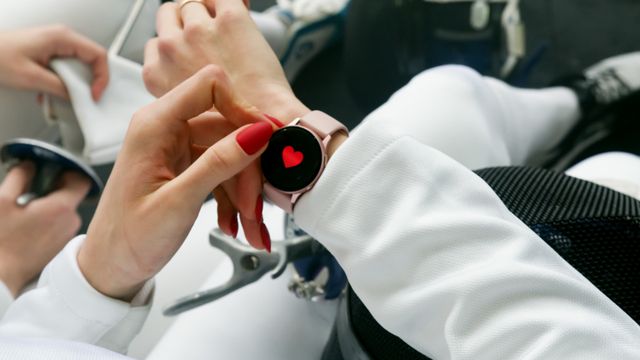
Smartwatches capable of recording electrocardiograms (ECGs) are a prime example of the gray zone.
- US: Apple Watch ECG and Fitbit ECG are Class II devices cleared via 510(k) for detecting Atrial Fibrillation (AFib).
- EU: These require CE marking under MDR, typically as Class IIa devices, with strict clinical evidence requirements.
3. Continuous Glucose Monitors (CGMs)
CGMs are high-stakes medical devices.
- US: Regulated as Class II (sometimes Class III for implantable sensors). They require extensive clinical trials proving accuracy against blood glucose meters.
- EU: Classified as Class IIa or IIb depending on invasiveness and duration. The MDR demands rigorous post-market surveillance (PMS) plans.
Reimbursement Models: Who Pays?
Reimbursement is the engine of adoption. Without payer coverage, even the most accurate sensor remains a niche gadget.
United States: RPM and CPT Codes
In the US, Remote Patient Monitoring (RPM) is the primary reimbursement vehicle.
- CPT Codes: The Centers for Medicare & Medicaid Services (CMS) assigns specific Current Procedural Terminology (CPT) codes for RPM:
- 99453: Setup and patient education.
- 99454: Device supply and data transmission.
- 99457: 20 minutes of clinical time managing the data.
- Requirements: To bill, the device must be a prescribed medical device, the patient must consent, and data must be transmitted to a clinician.
European Union: National Variations
The EU has no unified reimbursement code. Coverage depends on national health systems:
- Germany: The DiGA (Digital Health Applications) framework allows approved digital health apps/devices to be prescribed and reimbursed by statutory insurance.
- France: The REACT program and specific "Actes" (billing codes) exist for telemedicine and RPM, but adoption varies by region.
- UK: NHS England has specific pathways for commissioning digital health technologies, often requiring NICE guidance.
Cross-Border Licensing and Data Privacy
Provider Licensing
- US: Telehealth laws vary by state. A doctor licensed in California cannot prescribe or monitor a patient in New York without a multi-state license or compact agreement.
- EU: Licensing remains national, though the EU is moving towards a European Digital Health Certificate to harmonize credentials.
Data Privacy (HIPAA vs. GDPR)
- US: HIPAA applies if the data is held by a "covered entity." Wellness apps collecting data directly from consumers often fall outside HIPAA but are subject to FTC enforcement.
- EU: GDPR applies universally. Health data is "special category data," requiring higher protection standards and explicit consent.
Conclusion
The wearable sensor market is maturing from novelty to necessity. Success requires navigating a dual-track system: maintaining agility for wellness features while adhering to rigid medical device regulations for clinical claims. In the US, the path is defined by the FDA’s risk-based classification and CMS reimbursement codes. In the EU, the MDR demands rigorous clinical evidence and Notified Body oversight.
Frequently Asked Questions
Sources
- U.S. Food and Drug Administration. General Wellness: Policy for Low Risk Devices. FDA.gov
- Centers for Medicare & Medicaid Services. Remote Patient Monitoring (RPM) Services. CMS.gov
- European Commission. Regulation (EU) 2017/745 on medical devices (MDR). EUR-Lex
- American Medical Association. Current Procedural Terminology (CPT) Code Set. ama-assn.org
Disclaimer: This article is for informational purposes only and does not constitute legal or regulatory advice. Always consult with qualified regulatory professionals for specific guidance on your products.